CUSTOMER STORIES
Start Small, Watch It Work, Keep Goin
How a Three-Generation Operator Rolled Out ZippyAssist Without Missing a Beat
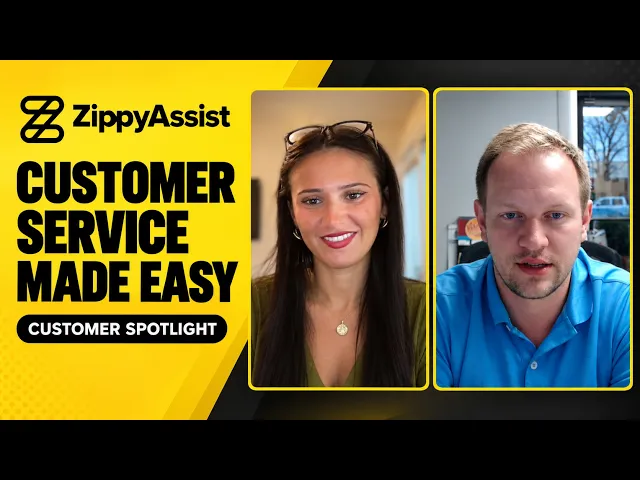
Cardinal Vending has been serving the St. Louis area from Fenton, Missouri, since 1987. Tyler Stewart's grandfather started the company. His dad runs it today, and Tyler, now General Manager, works alongside his brother in the business. Cardinal runs vending machines, micro markets, and AI coolers across a fleet of over 2,000 machines. Putting ZippyAssist on every machine and kiosk seemed like a daunting challenge. But with some planning, Cardinal folded the rollout into work they were already doing and kept the business running at full speed. Tyler sat down with Rylie Gill, Sales and Customer Success Manager at ZippyAssist, to talk about how that rollout went, what changed, and what he'd tell any operator thinking about getting started.

Calls, Guesswork, and Missed Handoffs
Before ZippyAssist, customer support at Cardinal ran through an answering service and the route drivers. Customers called in, and the team did their best to work out where they were and what had gone wrong.
"You can't understand what they're saying or where they're at — or, I understand that you're at a snack machine, but we have like seven of them there."
Refunds and messages were relayed by drivers through the site contact. That broke down when the timing didn't line up.
"Our drivers used to stop at the front desk, if it's a nursing home — wherever it would be. And the problem that we were running into is some of our early risers that would start at 1:00 or 2:00 AM would miss so-and-so at the front desk, and then they're calling us and being like, 'Hey, your driver's not getting to us.'"
Each missed handoff was small. Together, they added up to frustrated customers and frustrated clients.
Rolled Out at Their Own Pace
Getting ZippyAssist live is quick. Getting a sticker onto every machine in a large fleet takes longer, and Tyler was honest about that.
"Because you have to put the stickers on all the assets, it takes some time, and I'm still not even fully done. But I was also coupling that with doing price changes at the same time, so it was kind of a twofer — and getting rid of the old stickers that you had, just so people aren't confused."
Rather than stop everything to finish the job, Cardinal fit the rollout around the routes they were already running. It was a priority, but never an emergency.
"It's a priority, but it's also not the most important priority, because we still at least have our phones, so it's not the end of the world. You can kind of just do it at your own speed."
Where it made sense, Tyler sent a team to knock out a whole site in one go. Prisons and hospitals with 20 or more machines were natural targets. The ZippyAssist team kept the stickers organized, so each batch arrived ready to match to the right locations.
Then Cardinal made one simple change that stopped new gaps from opening up. Every new machine or kiosk now leaves the warehouse already stickered.
"The new machines or kiosks that go out, we just send them out with blank Zippy stickers and then put our own asset ID over top of it, and that seems to really help not miss any that are going out now. We've been doing that now probably for about six months, seven months, and that's helped a lot."
Once the Ball Got Rolling
The first stickers did more than cover machines. They gave the team proof that it was working, and that made the rest of the rollout easier to push forward.
"Once we got the ball rolling, it's definitely exciting, because then you start seeing stuff rolling in, and it makes you feel like, okay, it's working."
Simple Enough for Everyone
A rollout only moves if the people involved can actually use the system. Tyler's test for that is close to home.
"I think it's a really good program too. It's not super complicated. I always joke, if my dad can understand it — he's not super tech-savvy, and he even gets it. So I just think it makes the process really easy."
When questions came up, the ZippyAssist team was there to answer them.
"You guys are always good about getting back to me. Anytime I've ever had a question, you guys are always on top of it. So the customer support from you guys has been top-notch."
Fewer Calls. Clearer Feedback.
The first thing Tyler noticed was the phone going quiet. Customers now text or scan for help instead of calling, and the requests arrive with the details already captured.
"I think it's cut back tremendously on phone calls. We have way more feedback. You can see, with the pictures and with refunds and all that kind of stuff."
The change has been big enough that Cardinal is now looking at the cost of its answering service.
"There's been less phone calls for sure. That was one of the big things. My dad eventually wants to just eliminate our answering service, because we're paying for that."
A Picture Says It All
Customer photos have changed how the team diagnoses problems. They can see exactly what the customer saw, then pass it straight to the equipment provider when needed.
"Pictures really help show what the issues are — what the customer's seeing, or what's on the screen that's popping up on the vending machine or on the kiosk. And then you can also send that off to whoever your kiosk provider is, because I don't know everything about these machines and kiosks."
Control Over Repeat Claims
Refunds are handled in ZippyAssist too, with a full history of every customer who gets in touch. For Tyler, that history is one of the most useful features.
"One of the little features I like that I think is cool is being able to track the customers. So if you have a customer that's always, 'I lost $15' — it's nice you can see a customer log, so you can see if it's the same person over and over again."
With that log, Cardinal can raise a pattern with the client. If needed, they can stop a repeat claimant from submitting again.
"You guys give the ability to block that person from sending stuff in over and over. I think that's a really nice feature to have."
Beyond the Vending Machine
Cardinal uses ZippyAssist across its micro markets and AI coolers too, not just its vending machines.
One Sticker Covers the Whole Market
In its micro markets, Cardinal places a single sticker right below the kiosk scanner. That is where every customer is already looking.
"The Zippy sticker fits nice and clean right below the kiosk, where they go to scan — the barcode scanner. It doesn't hit it, but people see it, because when you go to scan, you're staring right at where you're scanning. I think it would fit on most kiosks, whatever brand you have."
That one placement handles requests from anywhere in the market: a double scan, a broken cooler, a product request, or an item that won't scan.
"There's times we get push-out items. We'll go to a show, we'll get a show deal, and one of the barcodes will be messed up, and it won't scan. I've had them send it in from that location — 'Hey, this Hostess whatever is not scanning' — and then we get it in there right away."
As Tyler points out, the speed is the point.
"People need to understand that it's instant. You're not waiting hours or days to get this feedback. It's instant."
AI Coolers Still Need a Help Channel
Some operators assume smart coolers don't need customer support. Tyler's experience says otherwise.
"Our AI coolers have cameras and weights, but if the cooler goes down, it doesn't matter if the cameras are on — it's gonna go down. Or the cooler gets hot, or the door's not latching correctly. A product request is still a product request."
Customer photos have even caught what the technology missed.
"There's still theft in our AI coolers. Even with cameras and inventory tracking, we still have some people that have figured out ways to steal products. If it doesn't line up with the inventory, we're like, 'Oh, we don't need to fill it, it's showing this' — then we get a picture of it and we're like, 'Oh, wow.'"
A Win for Clients and the Sales Team
Cardinal's clients notice the difference too. When customers have a direct way to get help, complaints stop landing on the site contact's desk.
"My buddy runs one of the high schools — he's a principal there — and I told him about how Zippy worked, and he's really excited. He's like, 'This is awesome. I don't have to deal with refunds.'
We're just a small footprint in their business. They don't want to deal with another headache. They're dealing with their own stuff."
That relief has become part of how Cardinal wins new business. Its sales reps bring a ZippyAssist sticker mock-up to every pitch.
"When our sales guys go to pitch customers or future customers, they have a mock-up of the Zippy sticker, and they explain to them, 'Hey, you're not gonna have to deal with all this — we got this. Most companies don't have this. This is something we have that other companies don't.'"
Tyler's Advice: Just Get Started
Asked what he'd tell an operator who's hesitant to begin, Tyler didn't hesitate.
"For people that are skeptical about just jumping in — you gotta start somewhere. I think the best strategy honestly, and this is the way I would do it if I was starting again, is I would just start rolling them out from day one. Everyone is getting new customers and new machines and new kiosks, so if you just start that way, at least it's getting something going."
Start with new installs, and you're building coverage without sending anyone out on extra trips. Then let the results do the convincing.
"Once they see even just that, they'll see, 'Oh wow, look how good this is working,' and it'll make them go out and do more."
He also has one practical tip for the sticker itself: add the word "request."
"I really think having 'request' on the sticker actually helped get more requests flowing in, because a lot of people don't want to call. They just want to send it in and be quiet and not talk to a human."
Ready to Get Started?
Like Cardinal Vending, you can go live quickly and roll out at your own pace, starting with the next machine you install. Book a demo to see how ZippyAssist can work for your operation.

Battle-Tested
Previous Article